
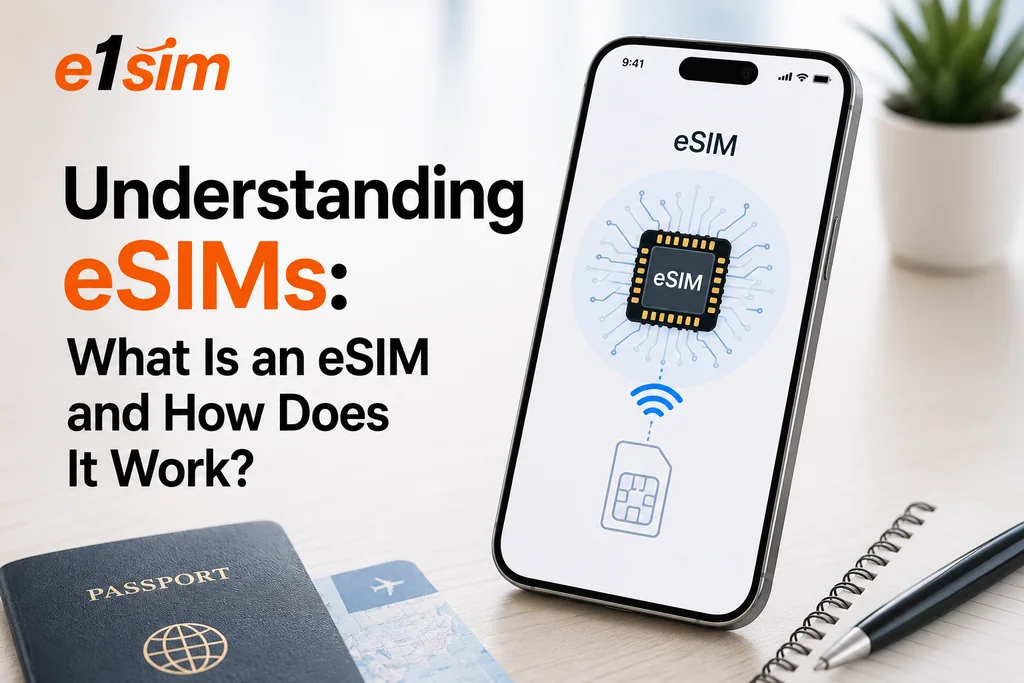
What Is an eSIM and How Does It Work?
Mobile technology keeps evolving, and the eSIM is one of the most significant changes to hit smartphones in recent years. If you've heard the term but aren't sure exactly what it means, you're not alone. This guide covers everything you need to know about eSIM technology — what it is, how it works, and why it matters.
What Is an eSIM?
eSIM stands for embedded SIM. Like a traditional SIM card, an eSIM identifies you as a subscriber and connects your device to a mobile network. The key difference? It's built directly into your device's hardware rather than being a removable card you insert into a slot.
Because an eSIM is digital, it can be reprogrammed. You don't need to physically swap cards to change carriers or data plans — you can do everything digitally, often in minutes.
eSIM vs. Physical SIM: Key Differences
- Physical SIM is a removable chip tied to a specific carrier plan. You insert it into your phone's SIM tray.
- eSIM is embedded in the device, carrier-independent by default, and activated through digital downloads.
- Physical SIMs can be lost or stolen; eSIMs cannot be physically removed.
- eSIMs allow multiple profiles, while a standard physical SIM is limited to one carrier at a time.
How Does eSIM Technology Work?
An eSIM is a small chip soldered onto your device's motherboard. It contains a secure element that stores subscriber profiles — think of each profile as a virtual SIM card. Here's the basic flow of how eSIM works:
- Profile download: When you purchase a data plan, the provider sends a QR code or activation code. Your device scans it and downloads the carrier profile over the internet.
- Profile installation: The device stores the profile in the eSIM chip's secure memory.
- Network connection: The eSIM uses the downloaded profile to authenticate with the mobile network, just as a physical SIM would.
- Profile switching: You can store multiple profiles and switch between them in your device settings — no physical swapping required.
What Devices Support eSIM?
eSIM support has grown rapidly. Most modern flagship smartphones now include eSIM capability, including:
- iPhone XS and later models
- Samsung Galaxy S20 and later (selected regions)
- Google Pixel 3 and later
- Many recent iPad models
- Apple Watch Series 3 and later
- Select laptops and tablets
Check your device's official specifications page or go to Settings → General → About (on iPhone) to confirm eSIM support.
Benefits of eSIM Technology
1. No Physical SIM Required
Say goodbye to tiny plastic cards that are easy to lose. With an eSIM, your connectivity is entirely digital.
2. Multiple Profiles on One Device
Many devices support storing multiple eSIM profiles simultaneously. You can keep a home plan and a travel plan on the same phone and switch between them with a tap.
3. Instant Activation
Setting up mobile data used to mean visiting a store or waiting for a SIM to arrive by mail. With eSIM, you can activate a new plan in minutes from anywhere with internet access.
4. Ideal for International Travel
Travelers benefit enormously from eSIM. Instead of hunting for a local SIM card at the airport, you can purchase and install a local data plan before you even board your flight.
5. More Durable Devices
Removing the SIM tray means one fewer opening in a smartphone's chassis, which can improve water resistance and structural integrity.
Are There Any Downsides to eSIM?
eSIM technology is excellent, but it's worth knowing the limitations:
- Not all carriers support eSIM yet, though adoption is growing quickly.
- Device compatibility matters — older phones won't have eSIM hardware.
- Transferring to a new phone requires downloading profiles again rather than physically moving a card.
- Some eSIM data plans are data-only, meaning you may need a separate plan for calls and texts.
The Future of Mobile Connectivity
The eSIM standard is evolving rapidly. The GSMA (the global mobile industry association) continues to update the specification, and some newer devices are now being released with integrated SIM (iSIM) technology — where the SIM functionality is built directly into the main processor chip for even greater efficiency.
As more carriers and manufacturers embrace this technology, physical SIM cards are likely to become obsolete within the next few years.
Conclusion
An eSIM is a smarter, more flexible way to manage mobile connectivity. Whether you're a frequent traveler looking for affordable data abroad or simply want the convenience of managing plans digitally, eSIM technology offers clear advantages over traditional SIM cards. As support grows across devices and carriers worldwide, there's never been a better time to understand and embrace eSIM technology.