
China eSIM
10 plans available
Best eSIM for China
Compare 10 prepaid eSIM plans for China starting from €5.33. Instant QR code delivery by email, activation in under 2 minutes, no roaming fees and no contracts.
Mobile Networks & Coverage in China
e1sim China plans run on China Unicom — one of China's three national mobile operators, with extensive 4G LTE coverage across all provinces, major cities, tourist areas and transport hubs. You get a reliable signal in Beijing, Shanghai, Guangzhou, Chengdu, Xi'an and all major tourist destinations, as well as on the high-speed rail network that connects them. Coverage on the Great Wall sections closest to Beijing (Badaling, Mutianyu) is strong; more remote wall sections in inner Mongolia or Hebei may have patchy signal.
Important note for travellers: China operates the Great Firewall (Fang Huo Chang Cheng), which blocks Google services (Maps, Search, Gmail, YouTube), WhatsApp, Instagram, Facebook, Twitter and most Western social media and messaging apps. Your e1sim data connection works perfectly — the restrictions are enforced at the network level across all SIM cards and eSIMs in mainland China, including tourist plans. To access blocked services, you will need a VPN installed and tested before you arrive in China (VPN apps cannot be downloaded from within China).
The Great Wall, Beijing & Hainan Island
The Great Wall of China — Wan Li Chang Cheng, the Wall of Ten Thousand Li — is one of the greatest engineering feats in human history, stretching over 21,000 kilometres across mountains, deserts and plains. For most visitors the wall is synonymous with the dramatic ridge-top sections north of Beijing. Badaling is the most visited and most fully restored, easily reached by high-speed train from Beijing North Station in about 40 minutes. Mutianyu, 90 kilometres northeast of the capital, is less crowded and arguably more scenic — forested hills roll to the horizon from the battlements, and a toboggan slide offers an unexpected descent. The Simatai section, four hours east of Beijing, is the only part lit up at night and visible from the surrounding reservoir, creating a magical reflection at dusk.
Beijing itself is a city of imperial grandeur and modern ambition. The Forbidden City — Zijin Cheng — is a 720,000 square metre palace complex of 980 surviving buildings, the largest collection of preserved ancient wooden structures in the world, home to the emperors of the Ming and Qing dynasties for five centuries. Tiananmen Square, immediately south, is the world's largest public square. The Temple of Heaven (Tiantan), the Summer Palace (Yihe Yuan) and the hutong alleyways of Nanluoguxiang round out a city that rewards days of wandering. Peking duck at a hutong roast house, dim sum in Wangfujing and hotpot in a basement restaurant are essential experiences.
Hainan Island, in the South China Sea off the southern tip of Guangdong province, is China's answer to a tropical resort destination — often called the "Hawaii of China." The city of Sanya on the island's southern coast is the main resort hub, with a string of luxury hotels, white-sand beaches and clear warm water along Yalong Bay, Dadonghai and the dramatic offshore rock formations of Tianya Haijiao. The island has its own distinct culture — home to the indigenous Li and Miao peoples — and a thriving duty-free shopping zone that makes it attractive for Chinese domestic tourists year-round. The climate is tropical: warm and relatively dry from October to April, hot and humid in summer with occasional typhoons from August to October.
Shanghai — Where Ancient China Meets the Future
Shanghai is China's financial and cultural powerhouse — a city of 25 million that somehow manages to feel both thoroughly Chinese and thoroughly global. The Bund (Waitan), the iconic colonial-era waterfront promenade, faces the futuristic skyline of Pudong across the Huangpu River: a tableau of art deco banking halls on one side and a cluster of record-breaking skyscrapers — the Shanghai Tower (632 m, the world's second tallest), the Jin Mao Tower, the Pearl of the Orient TV Tower — on the other. The view from the Pudong side at night, with the Bund lit up in gold, is one of the great urban spectacles on earth.
In the old town, Yu Garden (Yuyuan) is a 400-year-old classical Chinese garden of rockeries, pavilions and koi ponds, surrounded by a warren of teahouses and craft shops selling everything from silk fans to soup dumplings. The French Concession district — plane-tree-lined avenues of art deco villas, independent boutiques, jazz bars and dumpling restaurants — is the city's most atmospheric neighbourhood for an afternoon stroll. Nanjing Road, stretching west from the Bund, is one of the world's busiest shopping streets; the elevated Xintiandi plaza and the M50 art district cater to more discerning tastes.
Why Choose e1sim for China?

Instant Activation
Scan a QR code and go online in minutes — no physical SIM needed

Best Prices
Transparent pricing with no hidden fees or roaming surprises

Premium Network
4G/LTE on top local carriers — fast and reliable everywhere you travel
Explore China with e1sim
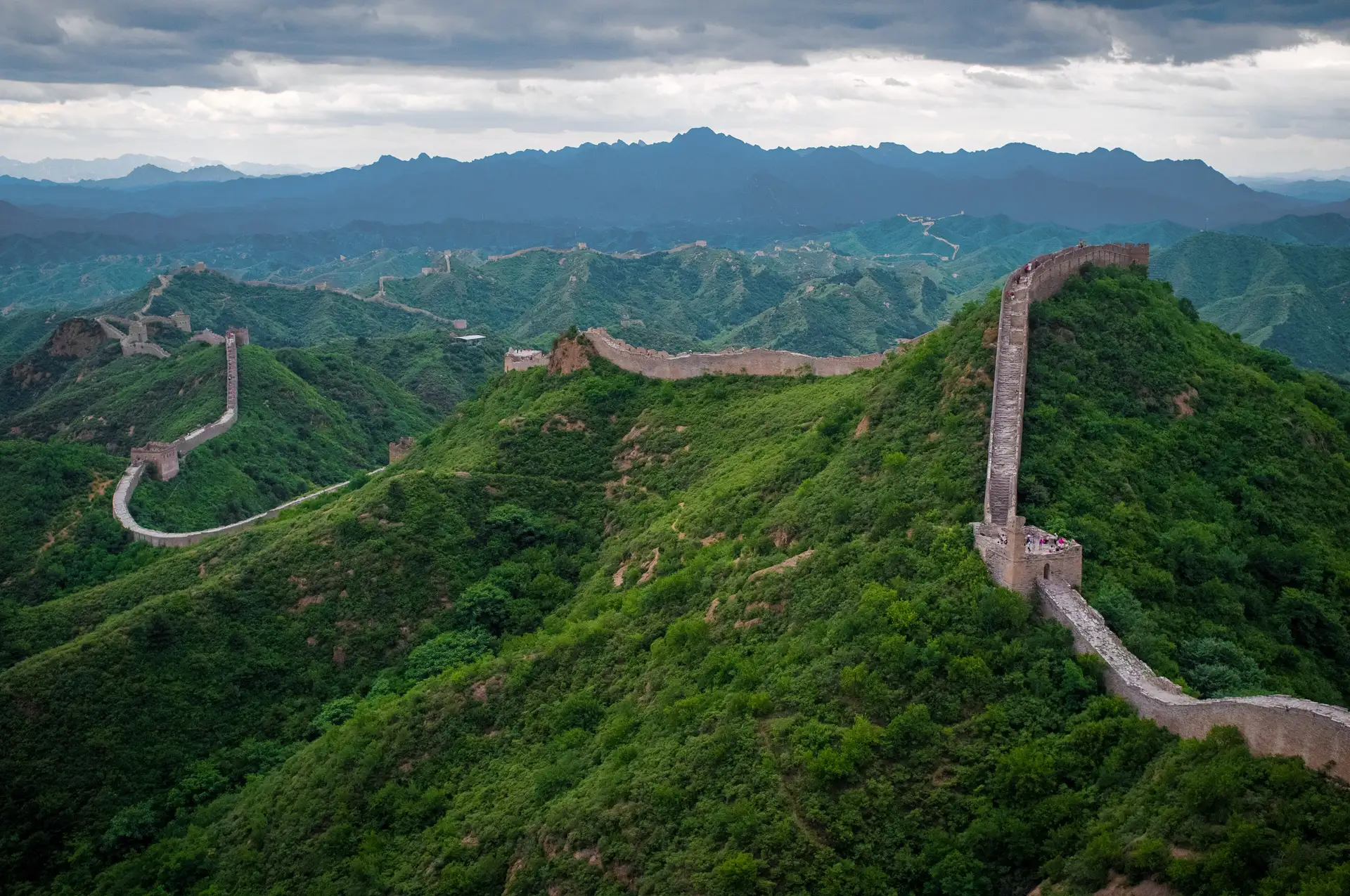

Great Wall of China
The world's greatest fortification snakes across mountains and valleys for over 13,000 miles
Forbidden City
A thousand halls of imperial splendor at the heart of Beijing, home to 24 dynasties of emperors
Li River & Guilin
Sail past surreal karst peaks mirrored in jade waters — China's most iconic landscape by far